


We are DS energy GmbH – a fast-growing company based in Gera with around 120 employees. Large enough to offer long-term security, yet small enough for your commitment and performance to make a real difference. Every construction site brings new challenges, giving you the opportunity to grow with your projects and contribute your expertise. We value a family-oriented culture, down-to-earth teamwork, and a forward-looking mindset.
Your Responsibilities
-
Independently lead and supervise installation crews on construction sites
-
Review construction documents, installation drawings, and work instructions
-
Implement and monitor compliance with all occupational health and safety requirements
-
Ensure that all work is carried out professionally and according to specifications
-
Maintain site diaries, installation reports, and related documentation
-
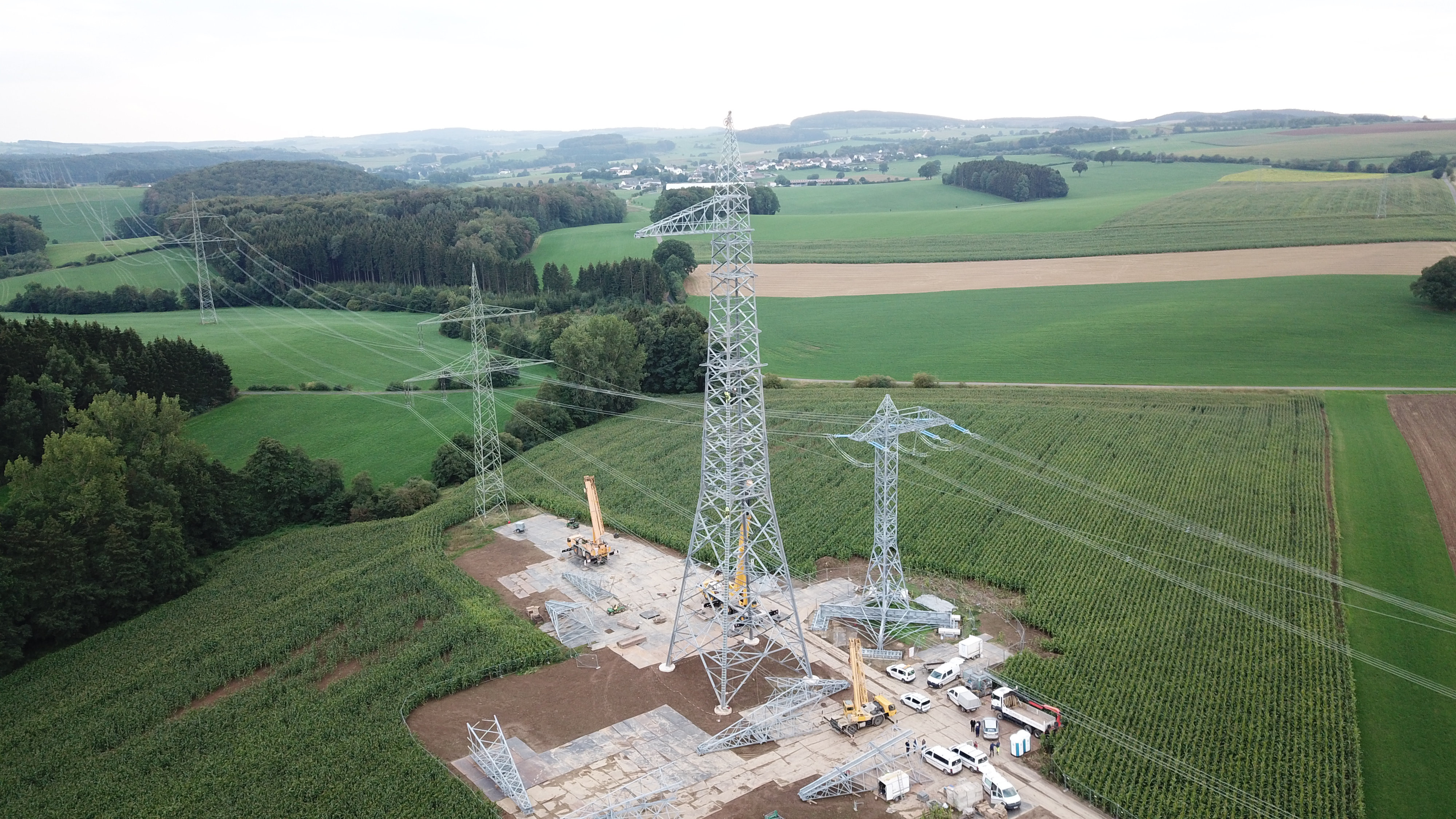
For overhead power line and high-voltage projects: supervise tower erection, conductor stringing, and dismantling operations
-
Organize and coordinate daily site activities
-
Determine staffing, equipment, machinery, and material requirements
-
Conduct daily safety briefings and toolbox talks
-
Ensure project milestones and schedules are achieved
-
Serve as the on-site contact for clients, authorities, and subcontractors
What We Offer
-
Above-standard salary plus travel allowances and daily expenses
-
Opportunity to receive an annual performance bonus
-
Short working days on Fridays (in most cases)
-
Modern office facilities with docking stations at our construction depots, allowing you to work efficiently from any project site
-
A varied role where no two days are the same
-
Company car for business and private use, including a fuel card
-
Up to 30 days of paid annual leave
-
Complete personal protective equipment (PPE) provided
-
Excellent career development opportunities within a growing company
Your Profile
-
Completed technical or trade qualification, or proven professional experience as a Lead Site Supervisor or in a comparable role
-
Experience leading installation or construction teams
-
Ability to confidently read and interpret technical drawings and installation documents
-
Strong leadership skills, assertiveness, and a high sense of responsibility
-
Several years of experience in installation or construction work is an advantage
-
Knowledge of relevant technical regulations and safety requirements
-
Valid Class B driving licence (additional licence classes are an advantage)
-
Willingness to travel for projects throughout Germany
We are DS energy GmbH – a fast-growing company based in Gera with around 120 employees. Large enough to offer long-term security, yet small enough for your commitment and performance to make a real difference. Every project brings new challenges, giving you the opportunity to grow professionally and contribute your expertise. We value a family-oriented culture, down-to-earth teamwork, and a forward-looking mindset.
Your Responsibilities
-
Plan, organize, and manage projects from initial concept through successful completion
-
Take responsibility for project budgets and costs, including budget tracking and change order management
-
Serve as the main point of contact for clients, customers, and public authorities
-
Prepare project reports, status updates, and final project evaluations
-
Develop and maintain project plans, milestones, and work packages
-
Lead and motivate the project team while coordinating subcontractors
-
Ensure compliance with quality standards, occupational health, safety, and environmental regulations
-
Build and maintain long-term customer relationships
What We Offer
-
Above-standard salary plus travel allowances and daily expenses
-
Opportunity to receive an annual performance bonus
-
Flexible working hours with a home office option
-
Complete personal protective equipment (PPE) provided
-
Excellent career development opportunities within a growing company
-
Company laptop, IT equipment, and mobile phone provided
-
Company car for business and private use, including a fuel card
-
Up to 30 days of paid annual leave
-
Modern office facilities with docking stations at our construction depots, allowing you to work efficiently from any project site
-
A varied role where no two days are the same
-
Direct reporting line to the company's executive management
Your Profile
-
Degree in a technical or business-related field, a comparable qualification with relevant professional experience, or proven experience as a Project Manager
-
Knowledge of project management as well as cost and schedule planning
-
Strong leadership, communication, and negotiation skills
-
Willingness to travel for projects throughout Germany
-
Several years of experience managing and delivering projects is an advantage
-
Proficiency in Microsoft Office and project management software
-
Entrepreneurial mindset with a solution-oriented approach
-
Valid Class B driving licence
We are DS energy GmbH – a fast-growing company based in Gera with around 120 employees. Large enough to offer long-term security, yet small enough for your commitment and performance to make a real difference. Every construction site brings new challenges, giving you the opportunity to grow with your projects and contribute your expertise. We value a family-oriented culture, down-to-earth teamwork, and a forward-looking mindset.
Your Responsibilities
-
Independently manage and supervise construction sites
-
Prepare, monitor, and maintain construction schedules
-
Control project costs and budgets, including budget tracking and change order management
-
Ensure compliance with occupational health, safety, and accident prevention regulations
-
Maintain site diaries and project documentation
-
Plan, coordinate, and oversee construction activities
-
Coordinate personnel, machinery, equipment, and material resources
-
Monitor compliance with technical regulations, standards, and quality requirements
-
Act as the main point of contact for clients, authorities, and subcontractors
-
For overhead power line projects: coordinate erection work, crane operations, stringing activities, and pole work while liaising with grid operators and public authorities
What We Offer
-
Above-standard salary plus travel allowances and daily expenses
-
Opportunity to receive an annual performance bonus
-
Company laptop, IT equipment, and mobile phone provided
-
Company car for business and private use, including fuel card
-
Up to 30 days of paid annual leave
-
Modern office facilities with docking stations at our construction depots, allowing you to work efficiently from any project site
-
Excellent career development opportunities within a growing company
-
A varied role where no two days are the same
Your Profile
-
Degree in Civil Engineering, Industrial Engineering, or a comparable technical qualification (e.g. Master Craftsman or State-Certified Technician), or proven professional experience as a Construction Manager
-
Knowledge of German construction contract law (VOB) and relevant technical regulations is an advantage
-
Several years of experience in construction management preferred
-
Strong leadership, decision-making ability, and assertiveness
-
Proficient in Microsoft Office and construction management software
-
Excellent communication and negotiation skills
-
Willingness to travel for projects throughout Germany
-
Valid Class B driving licence
In Germany, overhead line installer is not an independent, state-recognized training occupation in the sense of a traditional dual vocational training program with a clearly defined official job profile.
Classification and practical reality:
An overhead line installer is a specialized role or job title in the field of overhead line and utility line construction.
Entry into this role usually comes through a completed technical or skilled trades qualification, for example as:
- electrician / electrical installer
- metalworker
- industrial mechanic
- mechatronics technician
Experienced career changers with strong practical skills can also qualify as overhead line installers.
Qualification as an overhead line installer:
The actual qualification is usually obtained through company-based training and additional specialist courses, including:
- internal training within the company
- safety instruction and technical safety training
- special courses for work on high-voltage and extra-high-voltage overhead lines
- height training, rope access, and rescue techniques
- qualifications for live-line working, depending on the area of work
Conclusion:
Overhead line installer is not a traditional apprenticeship profession, but rather a specialized career path built on a technical or skilled trades background and expanded through targeted further training in overhead line construction.
Cover letter
In your cover letter, we would like to learn why you would like to work at DS energy and what you can bring to the role in overhead line construction. Briefly describe your previous experience, your practical or technical skills, and why you would be a good fit for our team. What matters to us is not only your training, but also your motivation, reliability, and willingness to take responsibility. Please refer to the requirements of the position and show where your strengths lie. A personal cover letter tailored to DS energy is more convincing than a standard application letter.
CV / Résumé
Please send us a tabular CV. It should be clear, well-structured, and complete. List your most important professional positions, qualifications, and practical experience relevant to the role. You are also welcome to include additional qualifications, practical skills, or personal interests.
Certificates and references
Please attach any available school certificates, training certificates, employment references, and other relevant supporting documents to your application. Evidence of further training or completed courses is also welcome.